Public Comment for Pasadena Municipal Services Committee
Dear Chair Jones and members of the Municipal Services Committee,
These comments relate to the Arroyo Seco Water Reuse Project, specifically but not limited to the San Pascual site.
This project's plans are broken beyond repair. The project leads' refusals to admit this demonstrates their inability to fix the plans. You must ask tough questions.
I will focus these comments on failures of Groundwater Recharge and Biofiltration but mature habitat destruction and corrupted community outreach are equally important failure points.
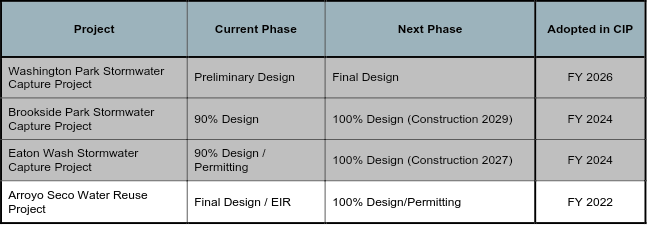
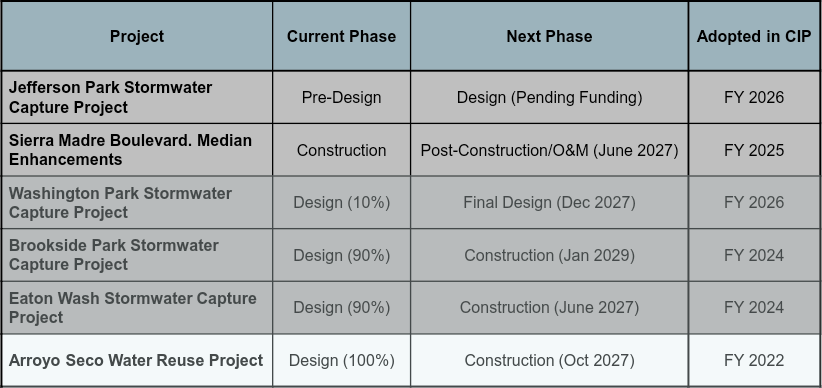
Design %
Every discussion of the project is stifled by the notion that plans have been completed for years and simply cannot be modified. They have been fundamentally broken all along and this situation cannot be remedied until this is acknowledged. A broken design cannot be final.
Pages 69 and 74 of the agenda packet contradict one another with respect to the phases.
January 2025 – Pasadena City Council
"Revoke the adoption of the Mitigated Negative Declaration and the Mitigation Monitoring and Reporting Program for the Arroyo Seco Water Reuse Project, and revoke approval of the ninety percent design plans for the Arroyo Seco Water Reuse Project"
Groundwater Recharge
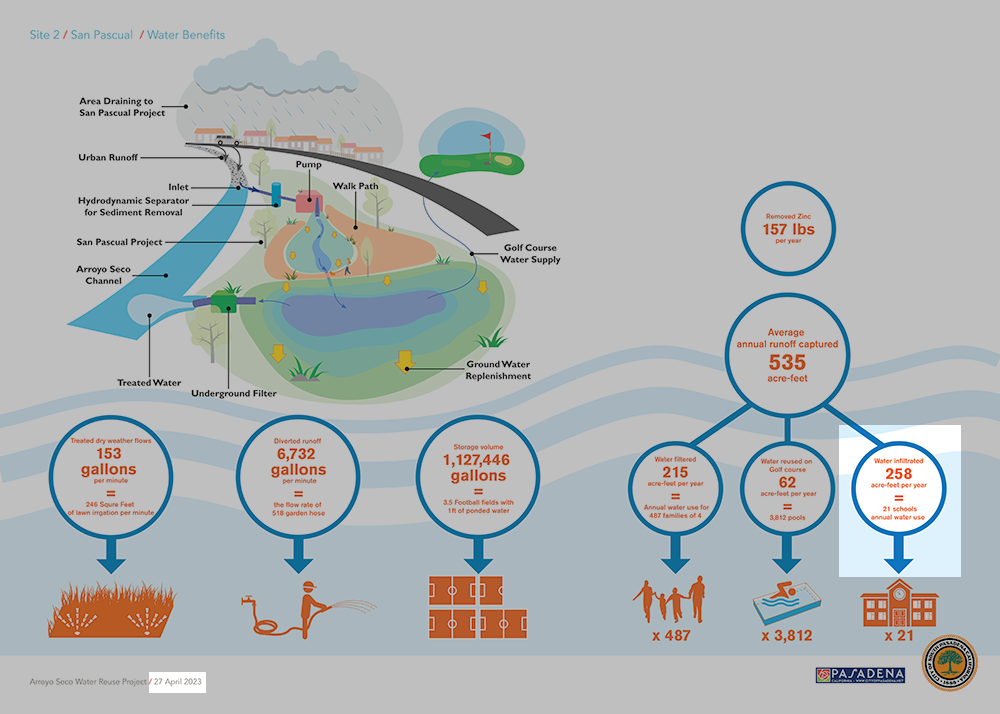
Groundwater recharge continues to be touted as a water benefit despite the 2022 geotechnical evaluation stating and Dawn Petschauer herself admitting that it is unlikely.
June 2022 – Appendix F-2: Geotechnical Evaluation
"The perched groundwater encountered at the contact between the younger alluvium and bedrock in borings B-1A, B-2A, and P-4A suggests that the site bedrock will significantly reduce the effectiveness of on-site stormwater infiltration."
April 2023 – Community Outreach
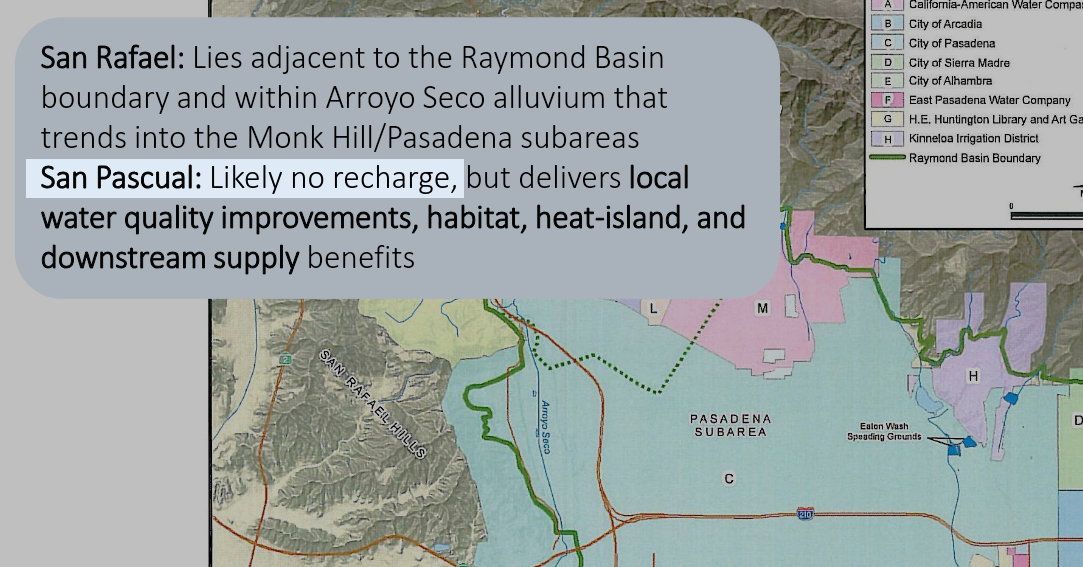
October 2025 – Pasadena Environmental Advisory Commission Meeting
Grey bubbles included "Responses to Community Concerns".
The bubble in the "Hydrology" section states "San Pascual: Likely no recharge".
May 2026 – Draft EIR
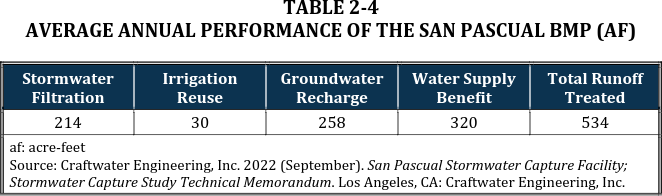
The 258 acre feet of groundwater recharge continues to be repeated. Notice 30 + 258 = 288. The erroneous 320 is a carry over from the original 62 acre feet purported to be used by the diversion (see June 2022 above) – 62 + 258 = 320. "Groundwater Recharge" should state 0 and "Water Supply Benefit" should state 30.
November 2026 – South Pasadena Natural Resources and Environmental Commission Meeting
Dawn Petschauer repeated that water benefits of the project include 258 acre feet of groundwater recharge.
Biofiltration
The primary driver of the project is addressing biological TMDLs. The only mechanism for remediating biological contamination is through natural processes – running water through plant roots and biologically active soil. The landscape plans are underspecified, contradictory and fundamentally incompatible with the project's engineering.
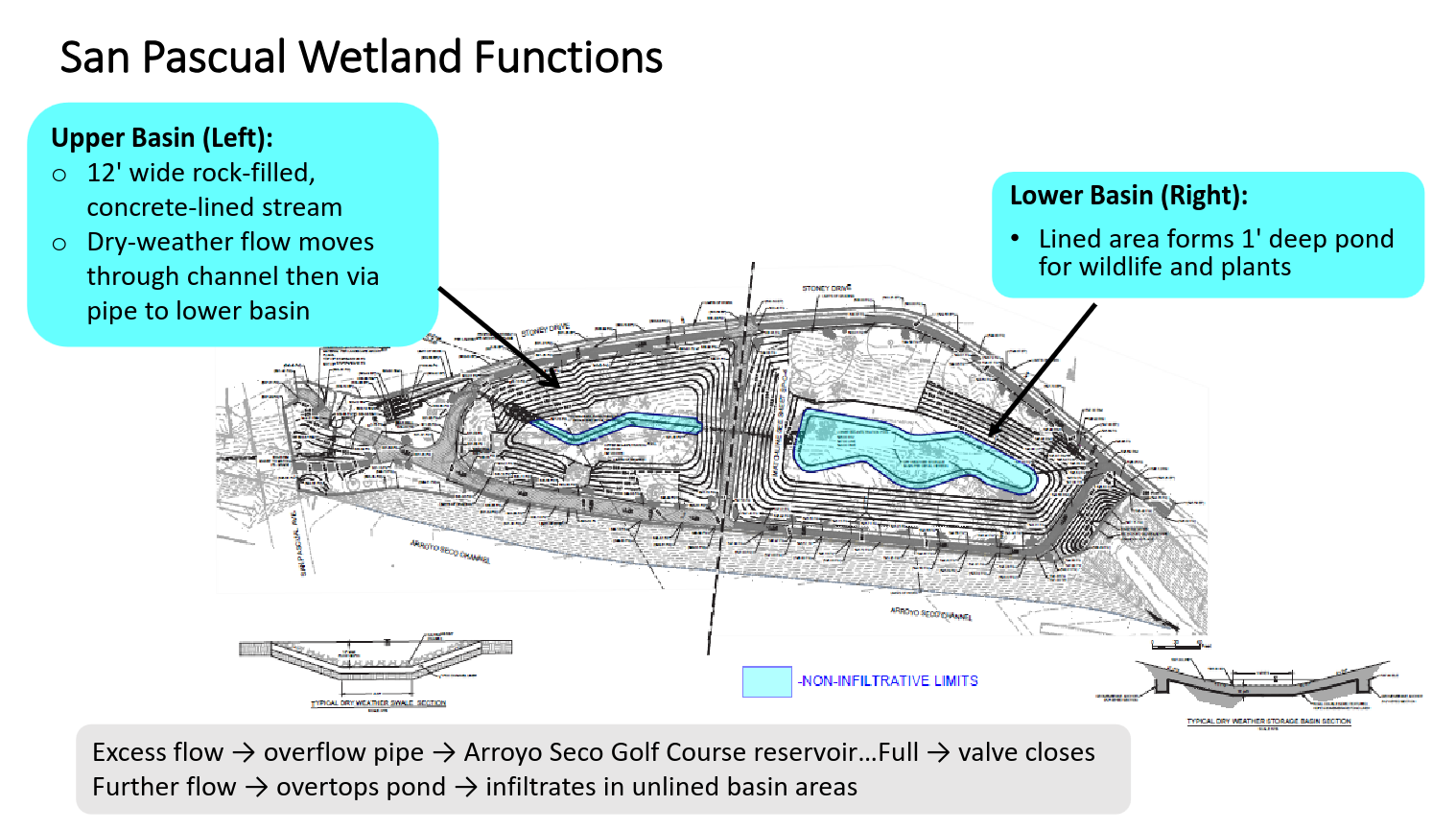
October 2025 – Pasadena Environmental Advisory Commission Meeting
A slide shows wetland plants inside of the concrete lined area exclusively.
May 2026 – Draft EIR
The landscape plan shows no wetland plants inside of the lined area.
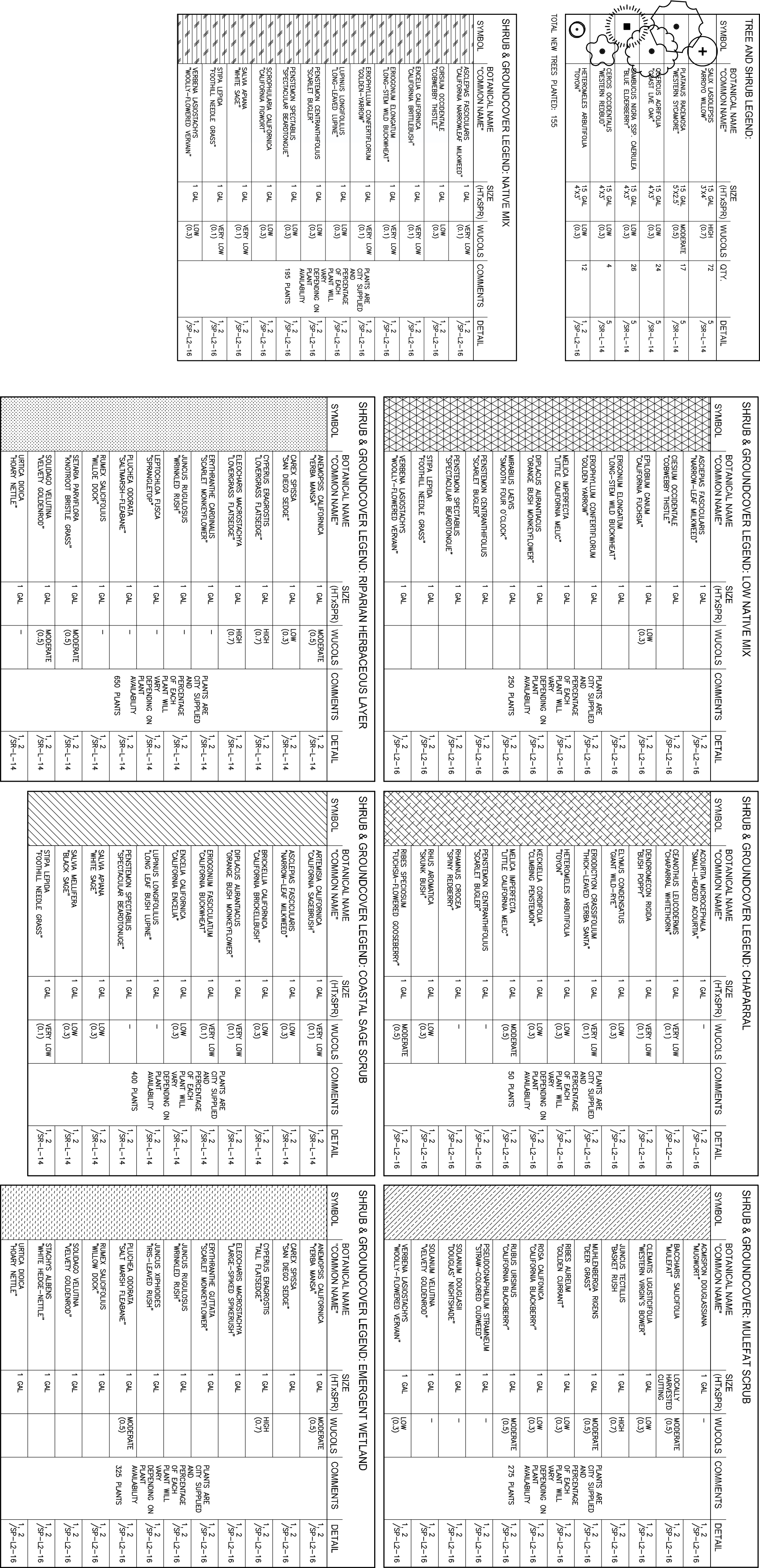
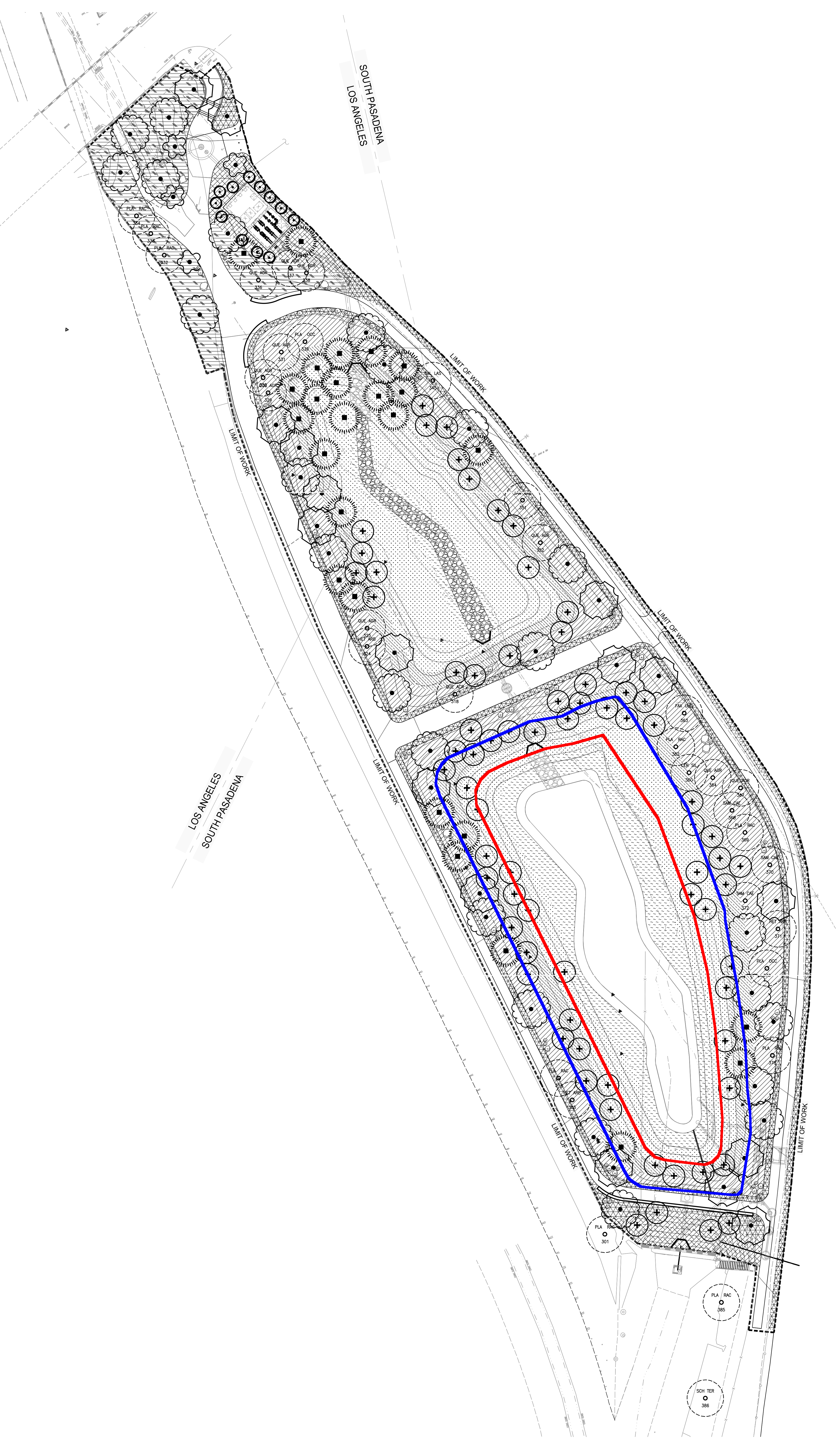
SMALLER POOL: The wetland plants in the basin require constant water during the summer yet the October graphic claims that the dry-weather flows will remain inside of the concrete-lined channel. No wetland plants will survive there and thus no biofiltration will occur there. If this basin is flooded during wet-weather flows most non-wetland plants in the area will be submerged beyond survivability.
LARGER POOL: Most of the wetland plants will be submerged beyond survivability with up to 4 feet of year-round inundation as has been presented only recently. Only 1 of the 12 species of "Emergent Wetland" species can tolerate anything more than a couple of inches of constant submersion. 0 of the 12 species of "Riparian Herbaceous Layer" can survive constant submersion. Only plants at the very edge of the pool (inner red/stroked line) will survive to provide scant biofiltration leaving an otherwise inert 80 foot wide and 4 foot deep pool of murky water year round. When wet weather flows (outer blue/stroked line) are allowed to elevate the water level another 4 feet the wetland plants that survive on the dry-weather edge will be submerged beyond survivability if left flooded for any extended period of time. With poor infiltration on site the overflow valve would have to be calibrated precisely to control wet weather inundation. This level of micromanagement is unlikely, most water-adjacent species will not survive, biofiltration and habitat will be minimal, algae will proliferate, erosion and sedimentation of the slopes will be a constant management issue leaving increasingly unstable and unproductive monoculture slopes at best or barren slopes at worst.
June 2026 – Plan Viewing at City Hall
I met with Christina Monde and Craftwater Engineers Oliver Galang and Courtney Semlow to view the blueprints and ask questions.
MIG's Jennifer Zell, the project's landscape architect, told me that she has no more involvement with the project beyond what has been produced and thus provided no comment instead referring me to speak with Christina Monde.
At the meeting I was ensured that the landscape plan was tightly coordinated with the operations.
I asked about the levels of the water and was told, for the first time, how the system is supposed to operate but even then the explanations were unclear. The pool levels and pump/valve actuations remain unspecified.
When asked about details of operations and maintenance I was told "We'll figure it out as we go." I was told that nobody involved has previous experience designing such a system.
November 2026 – South Pasadena Natural Resources and Environmental Commission Meeting
Christina Monde repeated that the lined area will contain wetland plants.
Questions to Ask of Dawn and Christina
Is groundwater recharge likely? Is the number close to zero?
Does the landscape plan coordinate with the operational plan to provide rich biofiltration and habitat? Will there be an 80 foot wide by 4 foot deep pool year round with only temporary draining to a muddy pit while filling the golf course reservoir? Will this expand to a 120 foot wide by 8 foot deep pool during wet weather flows?
Where are the operational flows, water levels and management plans articulated?
Could the existing stream be lined as is with additional wetland plantings and maintain similar or superior levels of biofiltration?
Can invasive nuisance plants be extirpated on site as is?
Could the existing diversion have a hydrodynamic separator inlined as is without the use of any pumps?
Could the existing overflow have a jellyfish filter inlined with minimal effort?
Could the diversion be blocked temporarily so that the streambed may be tested for pollutants?
Have there been any water or soil tests conducted anywhere between diversion and outfall?
I ask you to address these concerns at a high level during this meeting and request that you instruct project leads to provide a complete set of answers to the above questions. I will follow up by e-mail.
Sincerely,
Angelo Gladding
South Pasadena Resident